
Pelvic Fracture Rehabilitation Protocol: A Comprehensive Guide
Navigating recovery demands a structured approach‚ encompassing initial stabilization‚ progressive exercises‚ and diligent monitoring for potential complications; physical therapy is crucial.
Early mobilization‚ guided by fracture stability‚ is paramount‚ alongside pain management and respiratory support to optimize functional outcomes and minimize long-term deficits.
A tailored protocol‚ incorporating weight-bearing progression‚ core strengthening‚ and neuromuscular re-education‚ facilitates a return to pre-injury activity levels and sustained well-being.
Understanding Pelvic Fractures
Pelvic fractures represent significant injuries‚ ranging from stable‚ minimally displaced breaks to complex‚ unstable disruptions of the pelvic ring. These injuries often result from high-energy trauma‚ such as motor vehicle accidents or falls from height‚ though stress fractures can occur in athletes or individuals with osteoporosis. Accurate classification‚ considering fracture location and stability‚ is fundamental to guiding treatment and rehabilitation strategies.
The pelvis provides crucial structural support‚ protecting internal organs and facilitating weight-bearing and locomotion. Fractures can compromise these functions‚ leading to pain‚ instability‚ and potential complications like nerve or vascular damage. Physical therapy plays a vital role in restoring function‚ beginning with early mobilization and progressing through strengthening and proprioceptive exercises.
Successful rehabilitation necessitates a comprehensive understanding of fracture healing‚ biomechanics‚ and individualized patient needs. Addressing pain‚ restoring mobility‚ and optimizing functional capacity are key objectives‚ ultimately enabling a return to pre-injury activity levels and enhancing quality of life.
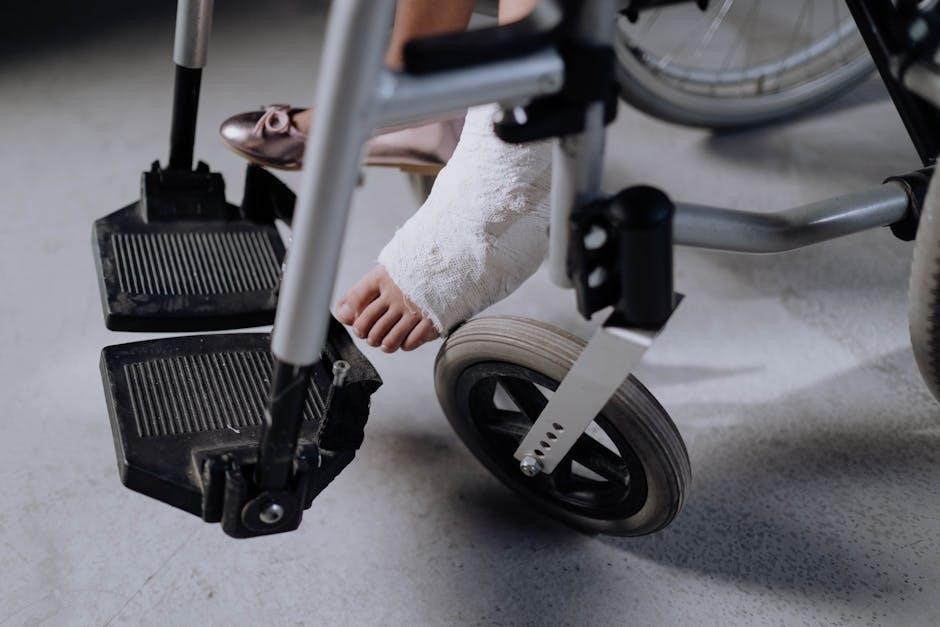
I. Initial Assessment & Stabilization (Phase 1: 0-6 Weeks)
Prioritizing fracture classification‚ medical management‚ and pain control is essential; immobilization via pelvic binders or external fixation ensures stability.
A. Fracture Classification & Severity
Pelvic fractures are meticulously categorized based on stability and mechanism of injury‚ utilizing systems like the Young-Burgess classification. Stable fractures‚ often involving isolated pubic ramus fractures‚ generally exhibit minimal displacement and are managed conservatively. Conversely‚ unstable fractures—including those affecting the pelvic ring or sacrum—demand immediate stabilization due to potential for significant hemorrhage and associated visceral injuries.
Severity assessment considers fracture location‚ displacement‚ comminution (fragmentation)‚ and involvement of weight-bearing surfaces. Complex fractures‚ representing a minority of cases‚ carry substantial morbidity and healthcare burdens. Accurate classification guides treatment decisions‚ influencing the choice between non-operative management with pelvic binders and surgical intervention‚ such as external fixation or open reduction internal fixation (ORIF). Understanding fracture severity dictates the intensity and progression of subsequent rehabilitation phases.
B. Medical Management & Pain Control
Initial medical management prioritizes hemodynamic stabilization‚ addressing potential hemorrhage associated with pelvic fractures. This often involves fluid resuscitation and‚ in severe cases‚ angiographic embolization to control bleeding. Pain control is paramount‚ typically initiated with multimodal analgesia—combining opioid and non-opioid medications—to optimize patient comfort and facilitate early mobilization.
Pharmacological interventions are complemented by careful monitoring for associated injuries‚ particularly to the bladder‚ bowel‚ and neurovascular structures. Prophylactic measures‚ such as deep vein thrombosis (DVT) prophylaxis‚ are implemented to mitigate risks. The duration of medical stabilization varies based on fracture severity and patient comorbidities. Effective pain management is crucial for participation in physical therapy and achieving optimal functional outcomes throughout the rehabilitation process.
C. Immobilization Techniques (Pelvic Binder‚ External Fixation)
Immobilization strategies are crucial for initial fracture stabilization‚ reducing pain‚ and preventing further injury. Pelvic binders‚ applied externally‚ provide circumferential compression to minimize pelvic ring instability. These are often the first line of defense in prehospital and acute care settings. External fixation‚ involving the percutaneous placement of pins and bars‚ offers more robust stabilization for complex or unstable fractures.
The choice between these techniques depends on fracture pattern and severity. External fixation may be used as a definitive treatment or as a bridging strategy before definitive internal fixation. Immobilization duration varies‚ guided by radiographic healing and clinical assessment. Careful monitoring for complications‚ such as pin site infections with external fixation‚ is essential.

II. Early Rehabilitation: Acute Phase (Weeks 1-3)
Focusing on gentle movements‚ bed mobility‚ and respiratory exercises‚ this phase prioritizes preventing complications and initiating a gradual return to function.
A. Bed Mobility & Transfer Training
Initial bed mobility exercises are fundamental‚ focusing on maintaining skin integrity and preventing pressure ulcers. Patients begin with assisted movements‚ such as rolling and bridging‚ carefully monitoring pain levels and fracture stability. Progressing to sitting at the edge of the bed requires close supervision and appropriate bracing or support.
Transfer training commences with minimal assistance‚ utilizing transfer boards and adaptive equipment as needed. Emphasis is placed on maintaining a stable pelvis and avoiding excessive hip flexion or rotation. Safe transfer techniques‚ including scooting and pivoting‚ are taught to both the patient and caregivers.
Gradual progression is key‚ advancing from bed to chair transfers‚ then to standing with support‚ and ultimately to independent ambulation with assistive devices. Throughout this process‚ careful attention is given to biomechanics and pain management‚ ensuring patient safety and optimizing functional recovery. Physical therapy starts with non-weight bearing exercises.
B. Gentle Range of Motion Exercises (Ankle Pumps‚ Quadriceps Sets)
Early implementation of gentle range of motion (ROM) exercises is crucial to prevent stiffness and maintain joint mobility. Ankle pumps and quadriceps sets are initiated within the acute phase‚ performed frequently throughout the day to stimulate circulation and minimize muscle atrophy. These exercises are typically pain-free and focus on isometric contractions‚ avoiding excessive stress on the fracture site.
Hip and knee ROM exercises are introduced cautiously‚ respecting pain boundaries and fracture stability. Passive ROM may be performed by the therapist initially‚ progressing to active-assisted and then active ROM as tolerated.
The goal is to restore normal joint mechanics and prepare the patient for more advanced strengthening exercises. Careful monitoring of pain and swelling is essential‚ adjusting the intensity and frequency of exercises accordingly. Physical therapy starts after 1 or 2 days of bed rest.
C. Respiratory Exercises & Coughing Techniques
Pelvic fractures‚ particularly those involving the lower ribs‚ can compromise respiratory function due to pain and limited chest wall excursion. Implementing respiratory exercises and effective coughing techniques is vital to prevent pulmonary complications like pneumonia. Deep breathing exercises‚ including diaphragmatic breathing‚ are encouraged multiple times daily to maximize lung expansion.
Controlled coughing techniques are taught to minimize stress on the fracture site while effectively clearing secretions. Patients are instructed to splint the abdomen with a pillow during coughing to reduce pain.
Incentive spirometry is often utilized to provide visual feedback and encourage maximal inspiratory effort. Regular assessment of respiratory rate‚ oxygen saturation‚ and auscultation of lung sounds are essential to monitor progress and identify potential issues.

III. Intermediate Rehabilitation: Protected Weight-Bearing (Weeks 3-6)
Gradual weight-bearing‚ core stabilization‚ and hip/knee strengthening exercises are introduced‚ carefully monitored to prevent overload and promote healing progression.
Initiating partial weight-bearing is a critical step‚ typically around weeks 3-6‚ contingent upon radiographic evidence of fracture healing and clinical stability. This progression must be carefully guided by a physical therapist and physician‚ starting with toe-touch weight-bearing and gradually increasing to partial weight-bearing as tolerated.
Assistive devices‚ such as crutches or a walker‚ are essential to provide support and limit stress on the healing fracture. The amount of weight allowed is often prescribed as a percentage of body weight‚ incrementally increased over time.
Pain is a key indicator; any increase in pain signals the need to reduce the weight-bearing load. Proper gait mechanics are emphasized to avoid compensatory movements that could jeopardize healing. Regular monitoring of the fracture site through clinical examination and imaging is crucial to ensure safe and effective progression.
B. Core Stabilization Exercises (Pelvic Tilts‚ Bridging)
Establishing a strong core foundation is paramount during pelvic fracture rehabilitation‚ beginning with gentle exercises like pelvic tilts and bridging. Pelvic tilts‚ performed in a supine position‚ enhance awareness of pelvic movement and activate deep abdominal muscles. Bridging‚ also supine‚ strengthens the glutes and hamstrings‚ contributing to pelvic stability.
These exercises are initiated with minimal resistance and gradually progressed by increasing repetitions or adding light resistance bands. Proper form is crucial; focus on controlled movements and avoiding lumbar hyperextension.
Core stabilization exercises improve neuromuscular control‚ protect the spine‚ and facilitate functional movements. They lay the groundwork for more advanced exercises and a safe return to activity. Consistent performance‚ guided by a physical therapist‚ is key to achieving optimal results.
C. Hip & Knee Strengthening (Isometric Exercises)
Isometric exercises are foundational in the intermediate phase‚ rebuilding strength around the hip and knee without stressing the fracture site. These involve contracting muscles without joint movement‚ minimizing impact and promoting early muscle activation. Quadriceps sets‚ gluteal squeezes‚ and hamstring contractions are initially performed in static positions.
Isometric holds are maintained for several seconds‚ repeated multiple times throughout the day. Gradually increasing hold duration and repetitions enhances endurance and strength. These exercises improve muscle recruitment patterns and prepare the muscles for dynamic movements.
Isometric strengthening is crucial for restoring stability and function‚ paving the way for progressive resistance training. Consistent adherence‚ guided by a physical therapist‚ optimizes recovery and minimizes compensatory movement patterns.
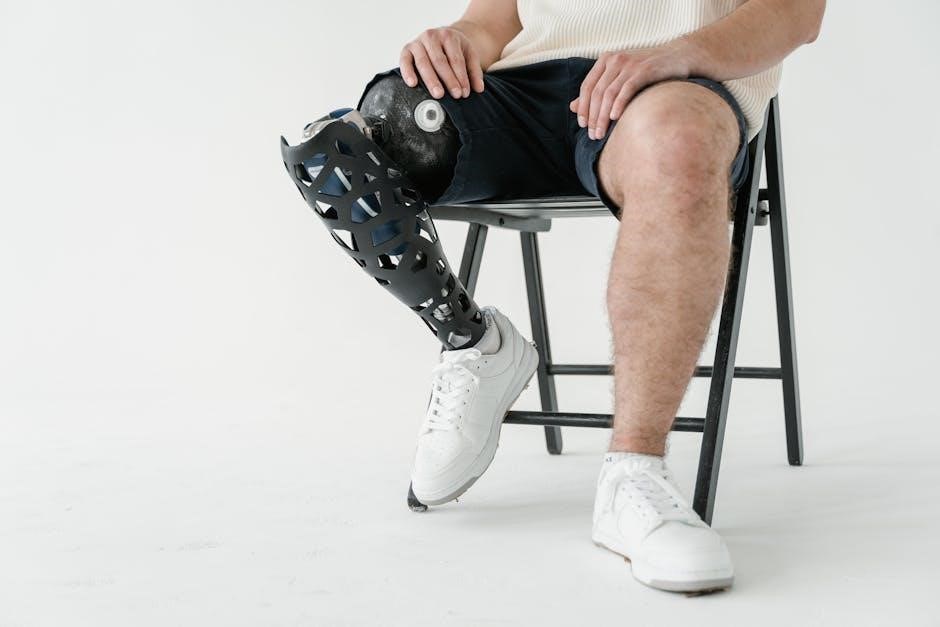
IV. Advanced Rehabilitation: Progressive Weight-Bearing (Weeks 6-12)
Gradual weight-bearing increases‚ coupled with gait training and functional exercises‚ restore mobility and strength; monitoring pain and stability is essential.
A. Progressive Weight-Bearing Progression
Initiating progressive weight-bearing requires careful assessment of fracture healing‚ typically confirmed through radiographic imaging. The protocol begins with partial weight-bearing‚ often utilizing assistive devices like crutches or a walker‚ gradually increasing the load tolerated over subsequent weeks. A common progression involves transitioning from toe-touch weight-bearing to 25%‚ then 50%‚ 75%‚ and ultimately full weight-bearing as pain allows.
Regular monitoring of pain levels and functional capacity guides the advancement. Any increase in pain signals a need to regress to a previous‚ more comfortable weight-bearing level. Physical therapists play a crucial role in providing individualized guidance and ensuring proper biomechanics during weight-bearing activities. Emphasis is placed on maintaining a neutral pelvic alignment and avoiding compensatory movement patterns. The goal is to restore normal gait mechanics and minimize the risk of developing secondary complications‚ such as limping or joint pain.
B. Gait Training & Balance Exercises
Following progressive weight-bearing‚ gait training focuses on restoring a normal walking pattern. Initial exercises involve practicing proper step length‚ cadence‚ and weight shifting‚ often utilizing parallel bars for support. As balance improves‚ patients progress to walking with assistive devices on level surfaces‚ then uneven terrain. Mirror feedback and verbal cues help refine gait mechanics and address any remaining asymmetries.
Balance exercises are integral to regaining functional stability. These begin with static balance activities‚ such as single-leg stance‚ progressing to dynamic exercises like tandem walking and perturbation training. Incorporating balance challenges‚ like reaching for objects or walking on foam pads‚ enhances neuromuscular control. Physical therapists assess balance using standardized tests and tailor exercises to address specific deficits. The ultimate goal is to achieve independent‚ safe ambulation and minimize the risk of falls.
C. Functional Exercises (Sit-to-Stand‚ Stairs)
Functional exercises bridge the gap between isolated strengthening and real-world activities. Sit-to-stand transfers are initially practiced with arm assistance‚ gradually reducing reliance as leg strength improves. Emphasis is placed on maintaining proper form‚ engaging core muscles‚ and controlling descent. Progressions include performing sit-to-stand from varying chair heights and without using arms.
Stair negotiation is a crucial functional skill. Training begins with ascending and descending single steps‚ utilizing handrails for support. Patients learn to lead with the stronger leg and maintain a controlled pace. As strength and balance improve‚ the number of steps is increased‚ and handrail assistance is faded. These exercises simulate daily activities‚ enhancing independence and confidence. Careful monitoring ensures patient safety and prevents compensatory movement patterns.
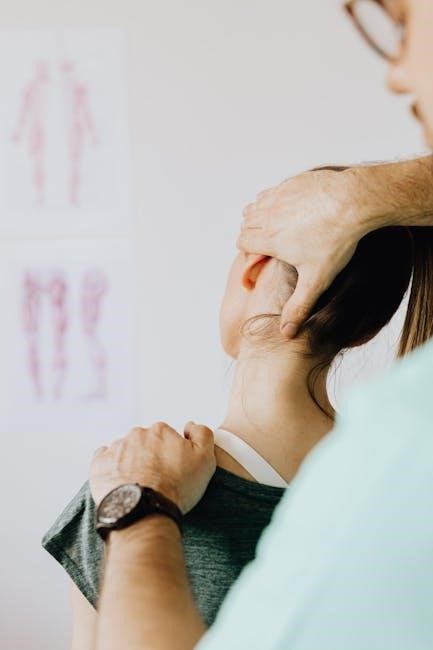
V. Late-Stage Rehabilitation & Return to Function (Weeks 12+)
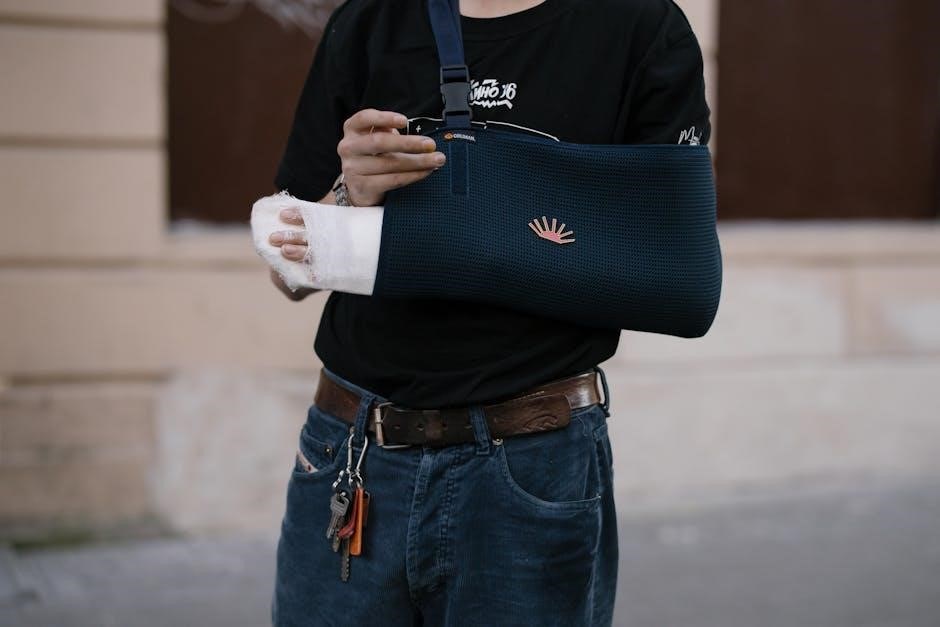
This phase focuses on maximizing strength‚ agility‚ and endurance‚ preparing individuals for full activity resumption and sport-specific demands.
Proprioceptive training and neuromuscular re-education refine movement patterns‚ enhancing stability and minimizing re-injury risk for lasting wellness.
A. Advanced Strengthening Exercises (Squats‚ Lunges)
As patients progress‚ incorporating advanced strengthening exercises like squats and lunges is vital for restoring lower extremity and core power. These movements challenge the rehabilitated pelvic region‚ promoting functional strength necessary for daily activities and higher-level tasks. Squats should begin with bodyweight variations‚ gradually increasing resistance with dumbbells or resistance bands as tolerated.
Lunges‚ both forward and lateral‚ further enhance stability and unilateral strength. Proper form is paramount; maintaining a neutral spine and controlled descent prevents compensatory movements. Progression involves increasing the range of motion‚ adding weight‚ or incorporating dynamic variations. Physical therapy guidance ensures safe and effective implementation‚ minimizing the risk of re-injury.
Monitoring for pain or instability is crucial throughout this phase. Adjustments to exercise parameters should be made based on individual response and tolerance‚ ensuring continued progress towards optimal functional recovery.
B. Proprioceptive Training & Neuromuscular Re-education
Restoring proprioception – the body’s awareness of its position in space – is critical following a pelvic fracture. Neuromuscular re-education focuses on retraining the muscles to work together efficiently‚ improving coordination and stability. Exercises often involve balance challenges on unstable surfaces like foam pads or wobble boards‚ gradually increasing difficulty.
Single-leg stance‚ with eyes open and closed‚ enhances proprioceptive feedback. Perturbation training‚ where a therapist gently disrupts balance‚ challenges the neuromuscular system to react and maintain control. Physical therapy utilizes targeted exercises to address any remaining deficits in muscle activation patterns and movement control.
This phase aims to optimize dynamic stability and reduce the risk of falls‚ facilitating a confident return to functional activities and sport-specific movements. Consistent practice and progressive challenges are key to achieving lasting improvements.
C. Return to Activity & Sport-Specific Training
The final phase focuses on a gradual and safe return to desired activities‚ including sports. This requires a comprehensive assessment of strength‚ endurance‚ balance‚ and functional movement patterns. A phased approach is crucial‚ starting with low-impact activities and progressively increasing intensity and complexity.
Sport-specific drills are introduced to simulate the demands of the individual’s chosen activity‚ ensuring proper mechanics and minimizing the risk of re-injury. Physical therapy guides the athlete through a tailored program‚ addressing any remaining weaknesses or limitations.
Monitoring for pain or swelling is essential‚ and modifications are made as needed. A successful return to activity requires patience‚ adherence to the rehabilitation protocol‚ and a collaborative effort between the patient‚ therapist‚ and physician.

VI. Potential Complications & Management
Addressing non-union‚ malunion‚ chronic pain‚ or nerve entrapment requires prompt intervention‚ potentially including further surgery and specialized pain management strategies.
A; Non-Union & Malunion
Non-union‚ the failure of a fracture to heal within a reasonable timeframe‚ and malunion‚ healing in an unacceptable position‚ represent significant complications following pelvic fractures. These issues can lead to chronic pain‚ instability‚ and impaired function‚ necessitating further intervention. Diagnostic imaging‚ such as X-rays and CT scans‚ are crucial for identifying these conditions.
Management strategies for non-union often involve surgical revision‚ including bone grafting and internal fixation‚ to promote healing. Malunion may require corrective osteotomy – a surgical procedure to realign the bone. Physical therapy plays a vital role post-surgery‚ focusing on restoring range of motion‚ strengthening surrounding musculature‚ and improving gait mechanics. Careful monitoring and adherence to weight-bearing restrictions are essential throughout the healing process to optimize outcomes and prevent further complications.
B. Chronic Pain & Nerve Entrapment
Chronic pain is a frequent sequela of pelvic fractures‚ stemming from tissue damage‚ joint dysfunction‚ or nerve irritation. Nerve entrapment‚ particularly of the sciatic or pudendal nerves‚ can contribute to radiating pain‚ numbness‚ and weakness. Comprehensive pain management is paramount‚ often involving a multidisciplinary approach.
This may include pharmacological interventions‚ such as analgesics and neuropathic pain medications‚ alongside physical therapy. Therapeutic exercises focus on restoring muscle balance‚ improving flexibility‚ and desensitizing painful areas. Nerve gliding techniques can address entrapment. Furthermore‚ modalities like transcutaneous electrical nerve stimulation (TENS) and manual therapy may provide symptomatic relief; Addressing psychological factors‚ such as anxiety and depression‚ is also crucial for optimal pain control and functional recovery.
C. Impaired Mobility & Functional Limitations
Impaired mobility is a common consequence of pelvic fractures‚ impacting activities of daily living (ADLs) and overall quality of life. Functional limitations can range from difficulty with walking and stair climbing to challenges with bending‚ lifting‚ and prolonged standing. Rehabilitation focuses on restoring lower extremity strength‚ flexibility‚ and coordination.
Physical therapy plays a vital role‚ employing progressive exercises to improve gait mechanics‚ balance‚ and endurance. Functional training‚ including sit-to-stand transfers and simulated ADLs‚ helps patients regain independence. Assistive devices‚ such as canes or walkers‚ may be initially necessary‚ with a gradual weaning process as strength and stability improve. Addressing compensatory movement patterns is crucial to prevent secondary musculoskeletal issues and optimize long-term functional outcomes.