
Quilting Guide: A Comprehensive Overview
Quilting is a rewarding craft, blending artistry and functionality. This guide explores techniques, from selecting fabrics and batting to mastering hand and machine quilting.
Learn about basting methods, accurate cutting, and assembling quilt tops. Discover how quilting in the ditch adds strength, and explore straight-line quilting designs.
Resources for beginners include tutorials on making a quilt sandwich, choosing the right needles and thread, and finishing with durable binding techniques.

Quilting represents a beautiful intersection of creativity, practicality, and historical tradition. For newcomers, it can seem daunting, but it’s fundamentally about layering fabrics and stitching them together to create a warm, comforting, and often visually stunning piece. This craft offers endless possibilities for self-expression, allowing you to design unique heirlooms or functional art for your home.
A quick video tutorial provides short, simple, and easy steps for completing a full quilt, making it accessible even for those with limited sewing experience. Understanding the basics – from tools to techniques – is key to a successful start. Many resources, like those found on Instructables, break down the process into manageable steps, covering everything from fabric selection to finishing touches.
Whether you’re drawn to the intricate patterns of traditional quilts or the modern aesthetic of contemporary designs, quilting offers a fulfilling creative outlet. It’s a craft that connects you to generations of quilters who have found joy and purpose in this timeless art form.
What is Quilting?
Quilting, at its core, is the art of joining layers of fabric together through stitching. Typically, these layers consist of a quilt top (the decorative face), batting (the insulating middle layer), and backing fabric. The stitching, whether done by hand or machine, not only holds these layers together but also creates texture and design.
Historically, quilting served a practical purpose – providing warmth and comfort. However, it quickly evolved into a form of artistic expression, with quilters using different fabrics, patterns, and stitching techniques to create unique and beautiful works. Modern quilting continues this tradition, embracing both traditional methods and innovative approaches.
The process involves several key steps, including cutting fabric accurately, assembling the quilt top, and creating a quilt sandwich. Techniques like chain piecing and nesting seams contribute to precision and efficiency. Ultimately, quilting is a versatile craft that allows for endless creativity and personalization.
A Brief History of Quilting
Quilting’s origins trace back centuries, with evidence of layered textiles found in ancient civilizations. However, the quilting we recognize today began to take shape in medieval Europe, initially as a practical method for creating warm clothing and bed coverings. Early quilts were often made from scraps of fabric, showcasing resourcefulness and creativity.
The tradition traveled to America with early settlers, where it flourished. Quilts became essential for survival, providing warmth in harsh climates. They also served as storytelling mediums, documenting family histories and community events. During the 19th century, quilting became a popular social activity, with quilting bees bringing women together.
Throughout the 20th and 21st centuries, quilting has experienced revivals and transformations, evolving from a necessity to a celebrated art form. Today, it continues to inspire and connect quilters worldwide, preserving a rich heritage while embracing modern innovation.
Essential Tools and Materials
Successful quilting requires specific tools! You’ll need fabric, batting, needles, thread, rotary cutters, mats, rulers, and seam rippers. Proper materials ensure precision and a beautiful finish.
Fabric Selection for Quilting
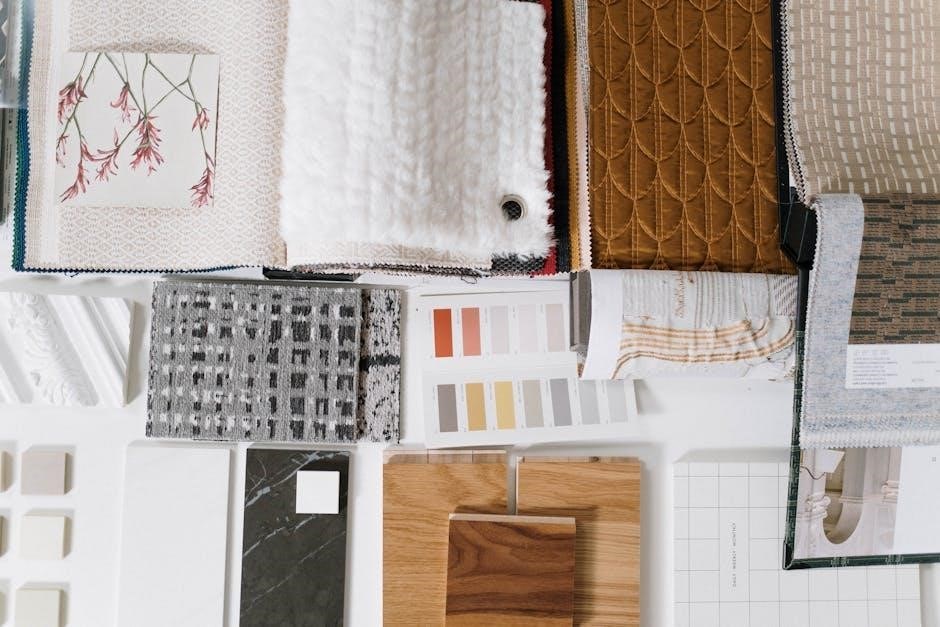
Choosing fabrics is a cornerstone of quilting, impacting both the aesthetic and structural integrity of your project. Consider fiber content – cotton is a popular choice for its ease of use, breathability, and affordability. However, blends with polyester or linen can offer unique textures and durability.
Pay attention to fabric weight; quilting cottons typically range from lightweight to medium-weight. Pre-washing fabrics is crucial to prevent shrinkage and color bleeding after the quilt is completed. A diverse palette of fabrics allows for creative expression, but coordinating colors and prints creates visual harmony.
Think about the quilt’s intended use. For example, a baby quilt might benefit from softer, more gentle fabrics. Explore different fabric types like batiks, solids, and prints to achieve desired effects. Don’t be afraid to mix and match, but always prioritize quality for lasting results. Remember to account for fabric shrinkage when calculating yardage!
Choosing the Right Batting
Batting, the layer between the quilt top and backing, significantly impacts the quilt’s warmth, drape, and overall feel. Several materials are available, each with unique characteristics. Cotton batting is breathable, affordable, and offers a traditional quilted look, though it can shrink slightly with washing.
Polyester batting is lightweight, resilient, and resists shrinkage, making it ideal for machine washing. Wool batting provides excellent warmth and drape, but is generally more expensive and requires careful handling. Blends, combining cotton and polyester, offer a balance of benefits.
Consider the quilt’s intended use. A lightweight summer quilt might benefit from a thinner polyester batting, while a winter quilt could utilize thicker wool. Loft, or thickness, also influences warmth and texture. Always pre-wash batting if recommended by the manufacturer to prevent puckering or shifting during quilting.
Quilting Needles and Thread
Selecting the right needle and thread is crucial for successful quilting. For hand quilting, fine, short needles – size 9 or 10 – are ideal, allowing for precise stitches through all layers. Quilting thread should be strong and smooth, often 100% cotton or a cotton-poly blend.
Machine quilting requires needles specifically designed for quilting. Universal needles work for many projects, but quilting needles have a slightly rounded point to avoid snagging fabric. Needle size depends on fabric weight; lighter fabrics need smaller needles (size 70/10 or 80/12).
Thread weight also matters. A 50wt thread is a good all-purpose choice, while heavier weights (30wt) are suitable for bold quilting lines. Consider thread color – matching the fabric blends the quilting, while contrasting colors highlight the design. Always test needle and thread combinations on scrap fabric before starting your quilt!
Rotary Cutters, Mats, and Rulers
Rotary cutters, mats, and rulers are essential for precise fabric cutting in quilting. A rotary cutter uses a circular blade to slice through multiple fabric layers simultaneously, offering speed and accuracy. Ensure the blade is sharp for clean cuts!
A self-healing cutting mat protects your work surface and extends blade life. Mats come in various sizes; choose one large enough for your projects. Look for grid markings to aid in accurate measurements.
Quilting rulers, typically acrylic, provide straight edges for guiding the rotary cutter. Common sizes include 6×24 inches and 6×12 inches. Clear rulers allow you to see the fabric underneath, ensuring precise cuts. Always keep your non-dominant hand safely behind the blade when using these tools!
Seam Rippers and Marking Tools
Seam rippers are indispensable for correcting mistakes – and every quilter makes them! Choose a comfortable seam ripper with a sharp blade and a secure handle. Use short, controlled motions to avoid damaging the fabric. Patience is key when undoing stitches.
Marking tools are crucial for transferring patterns and quilting designs onto fabric. Options include water-soluble pens, fabric pencils, and chalk. Test the marking tool on a scrap of fabric first to ensure it removes cleanly.
Consider the fabric color when selecting a marking tool; a light-colored pencil may be invisible on light fabric. For intricate designs, a fine-tipped fabric pen is ideal. Always remove markings before washing the finished quilt to prevent staining!
Quilt Construction Techniques
Assembling a quilt involves precise fabric cutting, chain piecing, and carefully nesting seams for accurate blocks. Creating a cohesive quilt top requires patience and attention to detail.
Cutting Fabric Accurately
Precise fabric cutting is foundational to successful quilting. Inaccurate cuts lead to mismatched seams and a wonky finished quilt. Utilizing a rotary cutter, mat, and ruler is highly recommended for consistent results. Ensure your rotary cutter blade is sharp; a dull blade will snag and distort the fabric.
Always cut on a self-healing cutting mat to protect your work surface and extend the life of your blade. Align your ruler carefully, applying firm pressure to prevent slipping. When cutting multiple pieces of the same size, stack the fabric layers securely, but avoid cutting too many layers at once – typically no more than four to six layers of quilting cotton.
Pay close attention to the grain of the fabric. Cutting consistently with the grain ensures that the quilt pieces won’t stretch or distort during the quilting process. Double-check measurements before cutting, and consider using a seam ripper to correct minor errors, though prevention is always preferable!
Chain Piecing and Nesting Seams
Chain piecing is a time-saving technique where you sew multiple pairs of fabric pieces together without cutting the thread between them. This minimizes stopping and starting, increasing efficiency. After sewing the chain, carefully cut the threads connecting the pieces.
Nesting seams refers to pressing seams in opposite directions on adjacent pieces. This creates a flatter, more accurate quilt top. For example, if the seam on one block is pressed to the left, the seam on the adjoining block should be pressed to the right.
When nesting, align the seams carefully and pin them securely before sewing. This ensures a precise quarter-inch seam allowance and prevents bulky intersections. Proper nesting significantly reduces puckering and distortion, resulting in a professional-looking quilt. Mastering these techniques streamlines the quilt top assembly process.
Assembling the Quilt Top
Assembling the quilt top involves joining the individual pieced blocks or fabric sections to create the overall design. Begin by laying out your blocks in the desired arrangement, paying attention to fabric placement and pattern flow. Once satisfied with the layout, start joining the blocks row by row.
Precise seam allowances – typically a quarter-inch – are crucial for accurate assembly. Utilize chain piecing and nesting seams to ensure flat, well-aligned intersections. Press seams open or to one side consistently throughout the process, enhancing the quilt top’s smoothness.
Carefully pin sections together before sewing, especially when dealing with complex patterns. Regularly check for accuracy and adjust as needed. A well-assembled quilt top is the foundation for a beautiful and durable finished quilt.
Creating a Quilt Sandwich (Layering)
Creating a quilt sandwich is a fundamental step, involving layering the backing fabric, batting, and quilt top. Start by laying the backing fabric wrong side up on a flat surface, ensuring it extends several inches beyond the quilt top on all sides. Smooth out any wrinkles or creases.
Next, carefully position the batting on top of the backing fabric, again extending it beyond the quilt top’s edges. Finally, center the quilt top right side up on the batting. Smooth each layer meticulously, working from the center outwards to eliminate bubbles and ensure a flat, even surface.
This three-layered construction provides warmth, texture, and stability. Proper layering is essential for successful basting and quilting, resulting in a beautifully finished quilt. Consider using spray basting or pin basting to secure the layers before quilting.

Basting and Quilting Methods
Basting secures quilt layers before quilting. Explore hand quilting, machine quilting with a walking foot, spray basting, and pin basting techniques for optimal results.
Hand Quilting Techniques
Hand quilting offers a traditional, meditative approach to finishing your quilt. It involves using small, even stitches to secure the quilt top, batting, and backing together. Begin with a properly basted quilt sandwich – crucial for preventing shifting during stitching.
A common stitch is the running stitch, known for its simplicity and speed. Maintain consistent stitch length and tension for a professional look. Rocking the needle, rather than moving the fabric, helps create even stitches. Consider using a thimble to protect your finger!
Different hand quilting patterns exist, from simple straight lines to intricate designs. “Quilting in the ditch,” following seam lines, is a great starting point. Practice on scrap fabric to refine your technique before working on your finished quilt. Patience is key; hand quilting is a time-consuming but incredibly rewarding process, resulting in a uniquely textured and heirloom-quality finish.
Remember to secure your thread properly at the beginning and end of each quilting line to prevent unraveling.
Machine Quilting with a Walking Foot
Machine quilting with a walking foot provides greater control and even stitch distribution compared to free-motion quilting, especially for beginners. A walking foot, also known as an even-feed foot, moves all layers of the quilt sandwich simultaneously, preventing puckering and shifting.
Start by adjusting your machine’s stitch length – a slightly longer stitch is often preferred for quilting. Practice on a sample quilt sandwich to get comfortable with the foot’s movement and your machine’s speed. Straight-line quilting is easily achieved with a walking foot; use a ruler as a guide for precise lines.
Consider quilting in the ditch, along seam lines, to add definition and stability. Spiral designs, starting from the center and working outwards, are also manageable with a walking foot. Repeat lines closely together for a denser quilted texture. Remember to maintain a consistent speed and gently guide the fabric – let the walking foot do the work!
This method is ideal for larger quilts and offers a quicker finish than hand quilting.
Spray Basting vs. Pin Basting

Basting is a crucial step in quilt construction, temporarily securing the quilt layers – backing, batting, and top – before the final quilting. Two popular methods are spray basting and pin basting, each with its advantages.
Pin basting involves using safety pins to hold the layers together; It’s a cost-effective method, offering control over placement, but can be time-consuming, especially for larger quilts. Ensure pins are spaced closely enough to prevent shifting during quilting.
Spray basting utilizes a temporary fabric adhesive. It’s significantly faster than pin basting and creates a smoother, more uniform quilt sandwich. However, spray basting requires a well-ventilated area and can sometimes leave a residue on the needle, necessitating frequent needle changes.
Many quilters recommend trying spray basting, as suggested by Christa Watson, for its efficiency. Consider the quilt size, your workspace, and personal preference when choosing a basting method.
Quilting in the Ditch
Quilting in the ditch is a fundamental technique, particularly beneficial for beginners, involving stitching along the seams where fabric pieces join on the quilt top. This method offers a subtle yet effective way to secure the layers and add definition to the piecing.
Experienced quilters often recommend combining ditch quilting with additional quilting designs. Stitching solely in the ditches of columns may lead to the quilt top bagging over time. Balancing strength throughout the quilt is essential, so consider quilting in the ditches of both rows and columns.
This technique is especially useful for showcasing intricate piecing and minimizing visual disruption. It’s a straightforward method achievable with both hand and machine quilting, using a walking foot for consistent stitch length and fabric feed.
While seemingly simple, mastering quilting in the ditch provides a solid foundation for exploring more complex quilting patterns and designs.
Straight Line Quilting and Spiral Designs
Straight line quilting, achievable with a walking foot, offers a modern and clean aesthetic. It’s a fantastic option for beginner quilters seeking a confident start, allowing for evenly spaced lines across the quilt surface. Repeating lines, closely or widely spaced, create varied textures and visual interest.
Beyond simple parallel lines, consider exploring more dynamic straight-line patterns. A captivating design is the spiral, starting with a small circle in the quilt’s center and gradually expanding outwards. This technique requires careful marking but yields a stunning, eye-catching effect.
Confident beginners can attempt spiral designs, adding a unique focal point to their quilts. Remember to practice on a smaller sample quilt first to refine your technique and ensure smooth, consistent lines.
Both straight-line and spiral quilting enhance the quilt’s texture and provide a secure finish, showcasing creativity and skill.

Finishing Your Quilt
Finishing involves attaching the backing, carefully binding the edges for durability, and ensuring the quilt is strong. These steps complete your handmade treasure!
Attaching the Backing Fabric
Attaching the backing fabric is a crucial step, preparing your quilt for the final quilting process. Begin by ensuring your backing fabric is several inches larger than the quilt top on all sides – typically 4-6 inches is recommended. This extra fabric allows for squaring up and prevents puckering during quilting.
Lay the backing fabric right-side down on a flat surface, smoothing out any wrinkles. Carefully center the quilt top, right-side up, on top of the backing. Gently smooth the quilt top, working from the center outwards to eliminate any air bubbles or creases. Pinning or using basting spray are both effective methods for securing the layers together.
For pin basting, use curved safety pins spaced approximately every 4-6 inches across the entire quilt surface. Ensure the pins are closed securely to prevent shifting during quilting. Alternatively, spray basting provides a temporary adhesive bond, holding the layers in place. Follow the manufacturer’s instructions for application. A well-attached backing ensures a smooth and professional finish to your quilt.
Binding the Quilt
Binding the quilt provides a finished edge, protecting the raw edges of the fabric and adding a decorative touch. Begin by preparing your binding strips – typically 2.5 inches wide – and joining them end-to-end to create one long strip. Press the binding strip in half lengthwise, wrong sides together.
Attach the binding to the quilt, starting midway on one side. Align the raw edges of the binding with the raw edge of the quilt top, and sew using a ¼-inch seam allowance. Miter the corners neatly, folding the binding at a 45-degree angle. Continue sewing the binding around the entire quilt.
Once the binding is attached, fold it over to the back of the quilt, covering the raw edge. Hand-stitch or machine-stitch the binding in place, creating an invisible finish. Consistent stitching ensures a professional and durable binding. This final step completes your quilt, ready for years of enjoyment!
Quilting for Strength and Durability
Quilting isn’t merely decorative; it’s crucial for structural integrity. The stitches secure all three layers – top, batting, and backing – preventing shifting and bunching over time. Consider quilting patterns that distribute stress evenly across the quilt. Quilting in the ditch, following seam lines, is a good starting point, adding stability to rows and columns.

However, relying solely on ditch stitching can lead to ‘bagging’ in open areas. Balance this with quilting across blocks, creating a network of support. Straight-line quilting and even spiral designs offer both aesthetic appeal and increased durability. The density of quilting impacts strength; more quilting generally means greater stability.
Choosing appropriate thread is also vital. A stronger thread will withstand more wear and tear. Remember to consider the quilt’s intended use – a frequently used quilt requires more robust quilting than a decorative wall hanging.

Resources for Beginner Quilters
Embarking on your quilting journey offers a wealth of learning opportunities! YouTube provides numerous quilting tutorials, offering visual guidance for every step, from basic techniques to complex patterns. Search for “Quilting 101” for introductory videos covering essential skills.
Online blogs, like “Diary of a Quilter,” share valuable insights, free tutorials, and practical tips on basting and quilting basics. Websites like Instructables offer detailed, step-by-step instructions with pictures, perfect for visual learners; Consider investing in a book by a respected quilting author, like Christa Watson, for in-depth knowledge.
Local quilt shops are invaluable resources, offering classes, fabric selections, and expert advice. Don’t hesitate to ask questions and connect with experienced quilters. Explore quilt kits, such as the Kaffe Fassett Jewel Frame Quilt Kit, for a curated project with all necessary materials.